Case Study

App · Falleando

← Back to Home

Overview

Falleando is a personal product design and development project that turns exploring Valencia’s Fallas into a more accessible, organised and engaging experience.
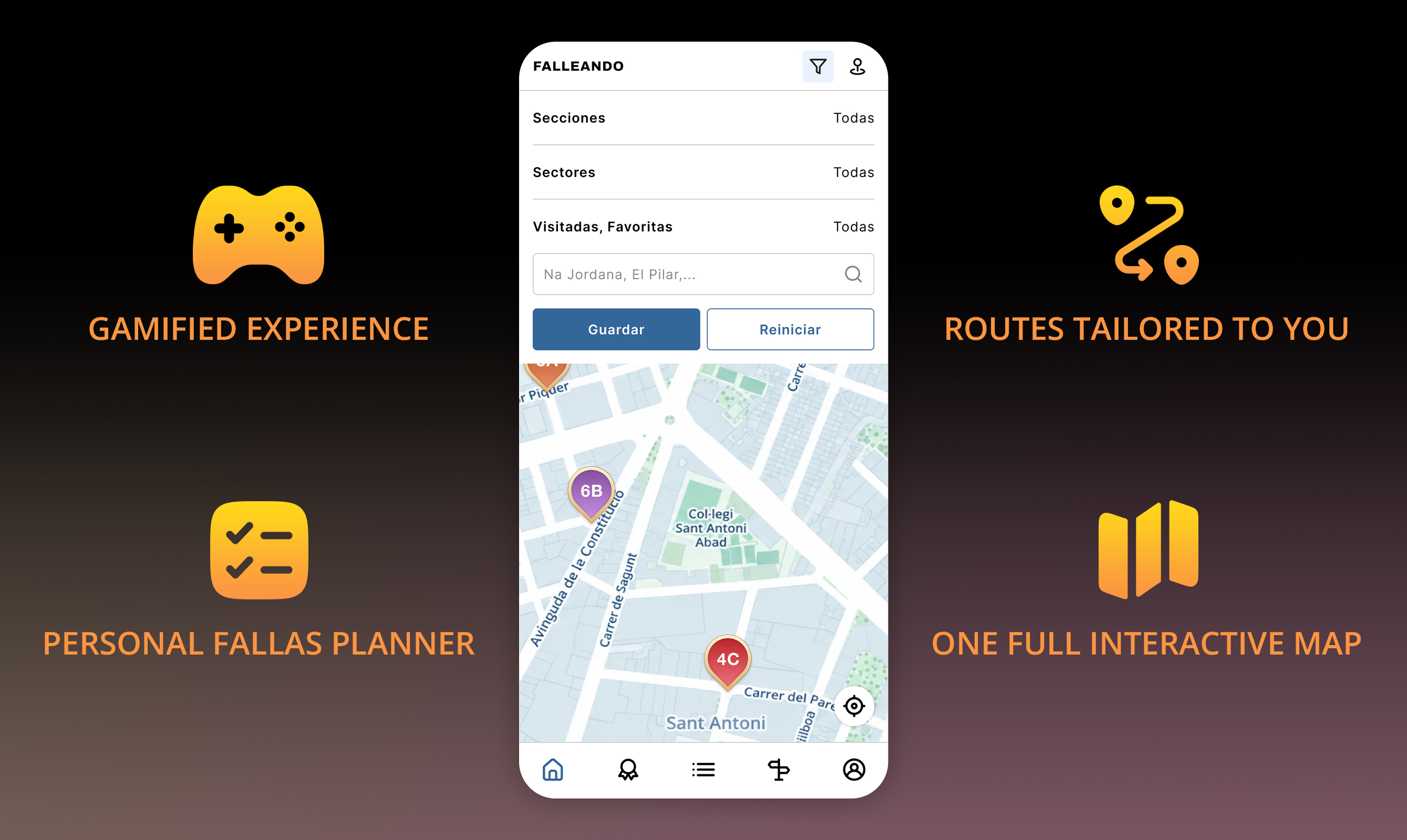
The mobile-first web app brings more than 400 fallas into an interactive map, allowing visitors to discover monuments, create personalised routes, save favourites, track visits and build their own Fallas collection.
I am leading the entire product independently, from research and UX/UI design to implementation and testing.

Problem

During Fallas, hundreds of monuments are spread across Valencia, but planning what to visit can be surprisingly difficult. Existing information is fragmented across maps, articles and official listings, while visitors must consider location, available time, categories, awards and the monuments they have already seen.
This creates a wider tourism and accessibility problem. People often stay around the most popular areas, miss lesser-known fallas and spend more time planning or walking inefficiently than enjoying the festival itself.
The challenge was to transform a large and complex cultural event into a simple experience that could guide both first-time visitors and experienced falleros without taking away their freedom to explore.

Process

I started by mapping the complete visitor journey and identifying the moments that created the most friction: discovering nearby fallas, understanding their categories, choosing what to visit and building a realistic route.
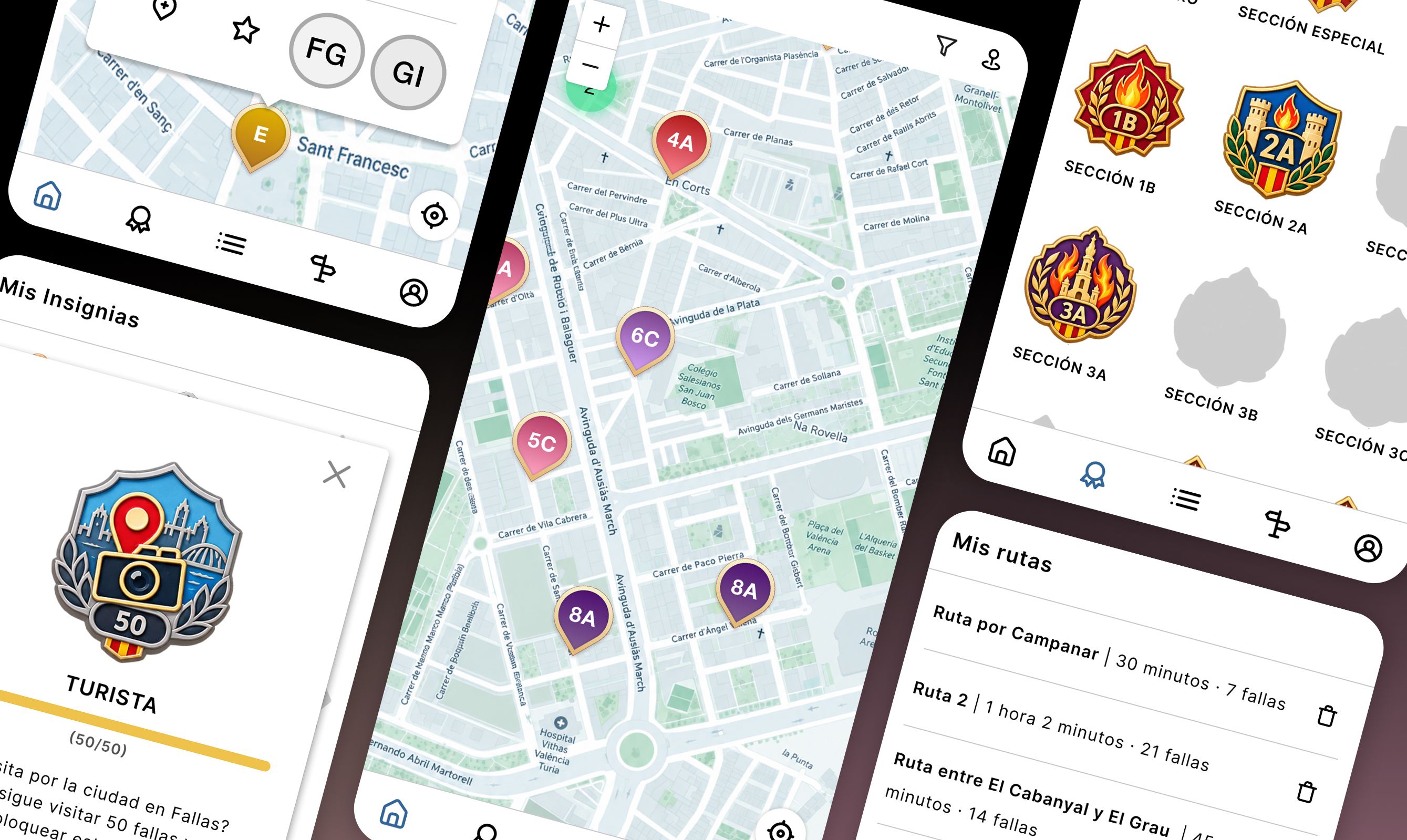
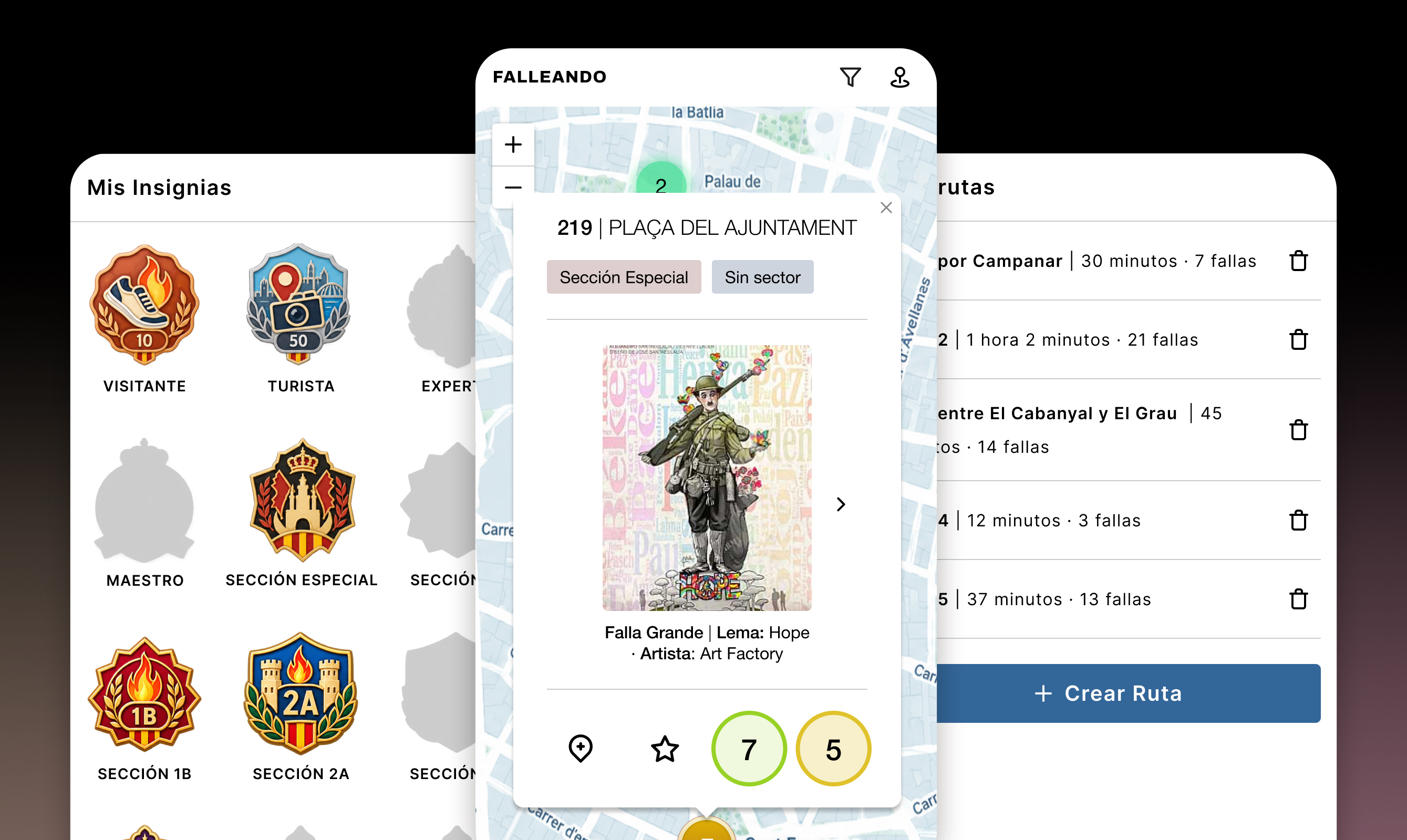
I structured and enriched data for more than 400 monuments, then designed a mobile-first PWA around an interactive map. The experience combines geolocation, advanced filters, favourites, ratings, visited states and route generation based on the user’s available time, starting point and preferences.
To encourage exploration beyond the usual landmarks, I also introduced gamification through achievements for visiting different sections, neighbourhoods and monuments.
Alongside the product and visual design, I am building the application myself. I use my knowledge of HTML, CSS and JavaScript together with AI-assisted development tools such as ChatGPT, Claude Code and Antigravity to write, review and debug the code. This allows me to move directly from research and prototypes to a working product, while retaining ownership of every product, UX and technical decision.

Outcome

Falleando is evolving from a personal idea into a functional product designed to solve a real cultural and tourism challenge.
The current experience centralises information that was previously fragmented and gives visitors practical tools to discover more of Valencia, organise their time and explore the festival in a more personal way. Personalised routes reduce unnecessary travel, while collections and achievements encourage people to visit lesser-known monuments, sections and neighbourhoods.
The project has also expanded my role beyond product design. By combining UX strategy, interface design, data structuring and AI-assisted development, I have been able to build and test a working product independently. Development is ongoing, with the long-term aim of validating it with real visitors and contributing to a more accessible, distributed and engaging Fallas experience.